
COMMENTARY: Racism’s Killing Legacy

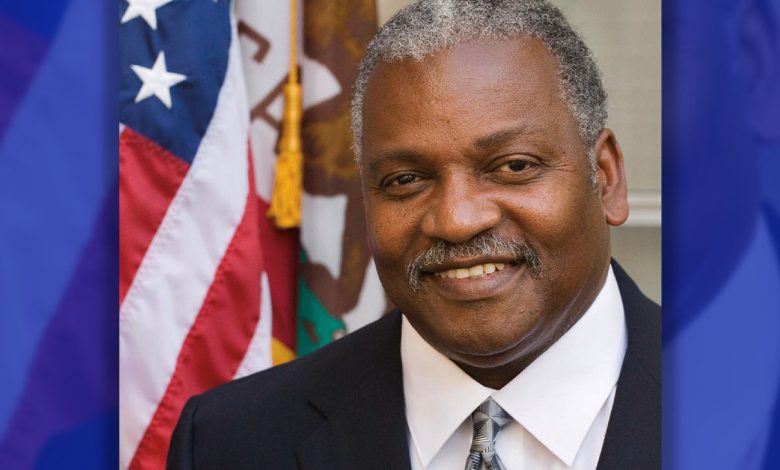
By Emil Guillermo
“Five score years ago, a great American, in whose symbolic shadow we stand today, signed the Emancipation Proclamation,” begins Martin Luther King Jr.’s “I Have A Dream Speech,” delivered 60 years (three score years ago) in Washington, DC this week.
More people know the end of the speech. But the other parts? The beginning? It actually starts with the image of Abraham Lincoln, a great president, freeing the slaves.
All these years later, it’s hard to imagine MLK could have dreamed up in his worst nightmare the situation the U.S. is in today politically.
In the race for president in the Republican Party, there are eight people running against one man who could be criminally convicted.
Four times.
It’s the criminally indicted former president, the notorious DJT, the only president living or dead with a mug shot.
Is he Public Enemy No.1? No, the former 45th president of the United States is just inmate P01135809.
No man is above the law, or above a mug shot. And Trump deserves it. This is the same guy we all heard on tape asking the Georgia secretary of state to find 11,780 votes. To steal an election? Let a jury decide.
Georgia is prosecuting Trump for his actions in an alleged criminal enterprise conducted with 18 others in an attempt to subvert democracy.

In the meantime, he still wants to be president again. And it’s no contest. A majority of morally bankrupt Republicans are still willing to give Trump a pass for alleged high crimes against democracy, simply because they think he can win the 2024 election.
And winning trumps ethics, morality and even justice in the U.S. today.
It’s the reason we must keep on dreaming.
I wasn’t at the 60th commemoration of the March on Washington. But I was at the 50th in 2013, right up front staring Al Sharpton and John Lewis in the face. I recall a great feeling of joy in the air. After 50 years, there was a sense of immense progress, chief among them a second term with an African American president from Hawaii.
But whatever joy we felt was definitely short-lived. Three years later, America got Trump, the embodiment of the great reversal, a return to the politics of our racial past, where whites always seemed to win.
It unfortunately means MLK’s speech has more of the ring of truth than it ever has.
Because the central metaphor isn’t the dream. It’s a check we’ve been given that we’re still waiting to cash.
“One hundred years later, the Negro still is not free,” King said in 1963, referring to President Abraham Lincoln’s Emancipation Proclamation of 1863. “One hundred years later, the life of the Negro is still sadly crippled by the manacles of segregation and the chains of discrimination.
“One hundred years later, the Negro lives on a lonely island of poverty in the midst of a vast ocean of material prosperity.
“One hundred years later the Negro is still languished in the corners of American society and finds himself in exile in his own land.
“And so, we’ve come here today to dramatize a shameful condition. In a sense we’ve come to our nation’s capital to cash a check.”
King continued: “When the architects of our republic wrote the magnificent words of the Constitution and the Declaration of Independence, they were signing a promissory note to which every American was to fall heir. This note was a promise that all men — yes, Black men as well as white men — would be guaranteed the unalienable rights of life, liberty and the pursuit of happiness.
“It is obvious today that America has defaulted on this promissory note insofar as her citizens of color are concerned. Instead of honoring this sacred obligation, America has given the Negro people a bad check, a check which has come back marked insufficient funds.
“But we refuse to believe that the bank of justice is bankrupt.
“We refuse to believe that there are insufficient funds in the great vaults of opportunity of this nation. And so, we’ve come to cash this check, a check that will give us upon demand the riches of freedom and the security of justice.”
The dream metaphor has stayed with us the last 60 years. But upon re-reading, the bank/check metaphor is more relevant today. It certainly connects to our real lives. Dreaming works too. But when you vote, you think about the economy, and your pocketbook.
Not whether you got enough REM sleep to keep dreaming.
You think of the price of gas. Your ability to pay the rent. Put food on the table.
For me, it’s the living metaphor from that same speech 60 years ago that has more urgency than the dream.
We still have a check in hand. And we are standing in line waiting for it to clear.
And we better get paid before a certain ex-president with the mugshot.
Emil Guillermo is a journalist and commentator. Get tickets to his one man show streamed live from New York. “Emil Amok, Lost NPR Host: A Phool’s American Filipino History” runs Sept. 6 and 14. Get tickets here:
https://www.frigid.nyc/event/6897:499/
This post was originally published on this site
